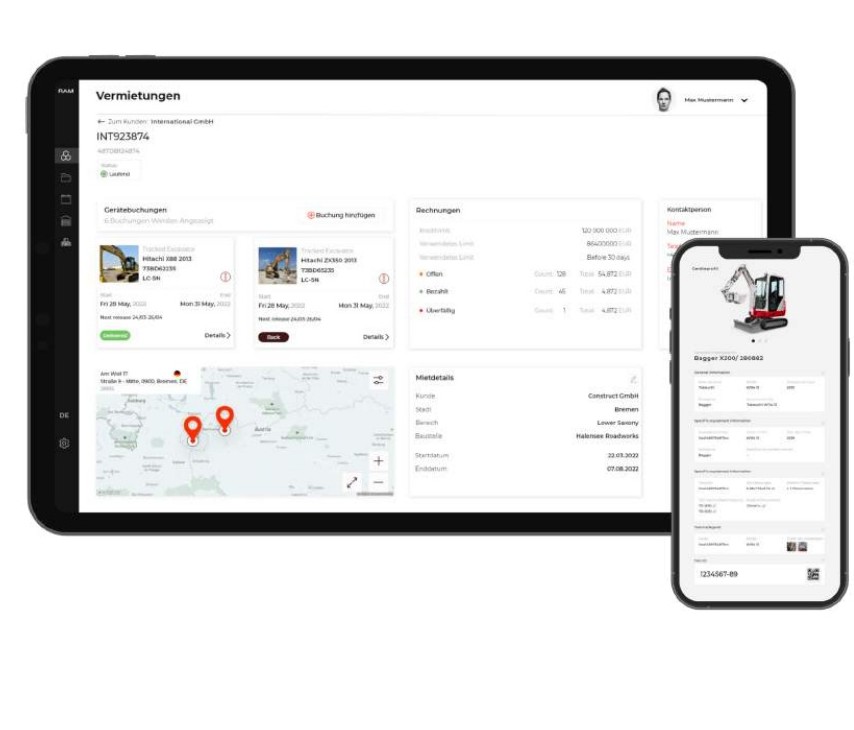
Rental is where the platform's complexity concentrates.
Modelled naively, a booking is a form with forty fields and no indication of which ones matter.
The dispatcher making it is thinking in a specific order — what, when, where, then commercial terms — and the form was asking in the order the database stored things.
Follow the thinking, not the schema
If the flow matched the dispatcher's sequence, most of the perceived complexity would disappear without removing a single field.
A sequence that mirrors how a dispatcher already thinks.
Each step shows its consequences immediately rather than at submit, and everything optional collapses behind progressive disclosure so the common path stays short.
Conflicts surface at creation
Not on submit, when it is too late to be useful.
Availability and pricing conflicts appear at the moment they are created, which removed a whole class of corrections that previously happened after the fact.
Progressive disclosure by default
The common path is short; the complete path is still there.
Optional and edge-case fields are one interaction away rather than always present, so the frequent booking is fast and the unusual one is still possible.
Booking became a task rather than a form.
The linear sequence and immediate feedback turned the most complex object in the platform into its most predictable flow.